
Before You Upload a Profile Photo: A Consent and Privacy Checklist
# Before You Upload a Profile Photo: A Consent and Privacy Checklist
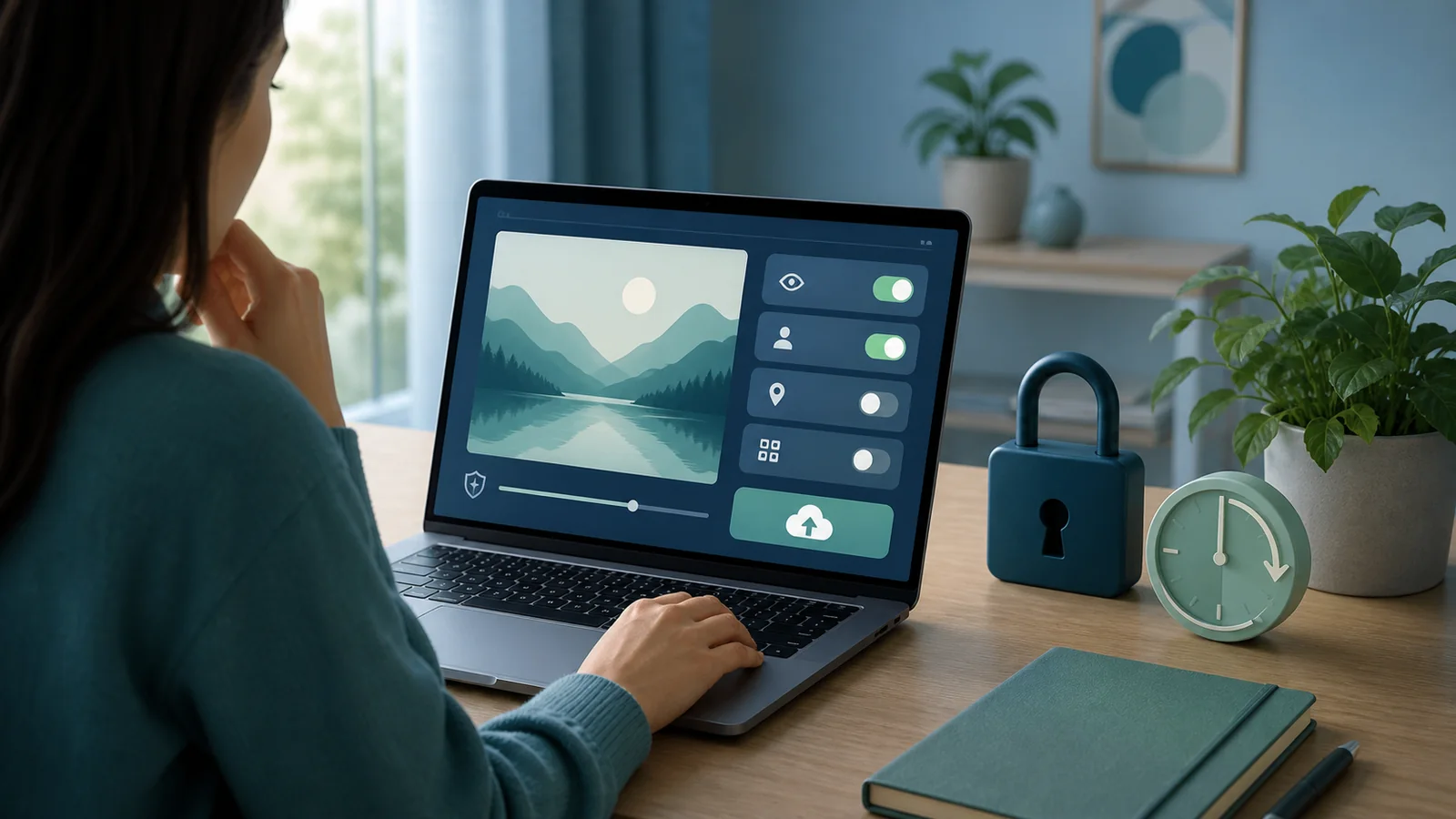
Uploading a profile photo to an editing, review, or AI tool can be convenient. It is still a disclosure of personal information. Before you upload, take a minute to confirm that the photo is yours to share, that anyone else visible has agreed, and that you understand what the service will do with the image. This checklist is designed for ordinary users, creators, and small teams; it is not legal advice.
The simplest rule is also the safest: upload only your own photo, only when you are an adult able to consent, and only after you have read the service’s current privacy and retention information. If any part feels unclear, do not upload until you have an answer.
For Amihotor specifically, start with the [privacy policy](/privacy-policy) and [terms of service](/terms-of-service), then use only a photo you are authorized to share.
## 1. Confirm the right to share
Start with ownership and permission. You might have taken the photo, received it from a photographer, or downloaded it from a social platform. Those situations are not identical. A photographer’s contract, a platform’s terms, or a workplace policy may affect what you can do with an image. If you are uncertain, use a photo you took yourself or ask the relevant person for permission.
Also check who is visible. A group photo, a child in the background, a client at a desk, or a stranger captured in a public place can make a simple upload more complicated. Crop or blur other people when they are not relevant. Do not upload a person’s image for automated analysis on their behalf without their informed agreement. Consent means more than assuming they would not object; they should understand the purpose and the service involved.
For Amihotor’s private-beta photo feedback, the intended use is particularly narrow: adult users submit their own images and explicitly attest that they have consented. That boundary is deliberate. It is not a tool for rating, identifying, or profiling other people.
## 2. Look beyond the face
Photos can reveal much more than an expression. Before upload, zoom in and scan the edges. Look for home addresses, license plates, school or workplace badges, screens with messages, children, documents, travel itineraries, unique location markers, or other details you would not want copied into a third-party system.
Metadata can also contain information. Depending on the camera and sharing workflow, image files may retain time, device, or location data. Many platforms strip some metadata, but you should not rely on that assumption. Consider exporting a clean copy for a new purpose, especially when you do not need the original’s full resolution or metadata.
A quick “share-safe” version can be enough: crop to the relevant portrait area, remove unrelated people, and save a copy without making the original unavailable. Keep your original local if you may want to verify what you shared later.
## 3. Read four policy answers before you submit
A trustworthy service should make these answers easy to find:
1. What is collected? Does it receive the original image, metadata, text prompts, account information, or all of these?
2. Why is it collected? Is the image used only to produce your requested result, or also to improve services or train models?
3. How long is it retained? Is there a stated deletion or expiry period for originals and derived results?
4. Who receives it? Does the service send data to model providers, cloud storage, analytics vendors, or affiliates?
The FTC advises businesses to be clear about privacy practices and honor the commitments they make to consumers. Read its [consumer privacy guidance](https://www.ftc.gov/business-guidance/privacy-security/consumer-privacy) for a general baseline. In the UK, the [ICO’s data-sharing code](https://ico.org.uk/for-organisations/uk-gdpr-guidance-and-resources/data-sharing/data-sharing-a-code-of-practice/) is useful background on documenting and governing data sharing.
You do not need to become a lawyer to use a photo tool. You do need enough clarity to make an informed choice. “We respect your privacy” is not an answer to the four questions above.
## 4. Prefer data minimization
Share the minimum needed to accomplish the task. If you want feedback on a profile-photo crop, you do not need to upload ten years of images, a full photo library, or a background with identifiable private details. If a low-resolution preview is sufficient, use it. If a single still image works, do not submit a video.
Data minimization is good personal practice and good product design. The goal is not to make a photo anonymous when that is impossible; the goal is to avoid giving away information that the task does not require. This also makes deletion and account management simpler.
For a team workflow, assign a clear uploader. Do not pass images through group chats, shared drives, and several AI tools merely because each is convenient. Keep a short record of which service received the image and when, then remove it when the purpose is complete.
## 5. Check access and deletion controls
Use a unique password or passkey for services that store images. Turn on multi-factor authentication when offered. Check whether you can view upload history, remove an image, delete results, close your account, or contact support. A service that handles personal photos should not make basic deletion mysterious.
There is an important difference between deleting a local copy, removing a photo from a public profile, and requesting deletion from a processor. If the service provides a retention schedule, save the link or confirmation. If it does not, ask before upload. When you are done with a test, remove the upload or use a service designed to expire it.
## 6. A one-minute pre-upload checklist
- I am the subject or have clear permission from every visible person.
- I am an adult and I understand the purpose of the upload.
- I have reviewed the image for addresses, badges, documents, children, and location clues.
- I know whether the service stores the original and for how long.
- I know whether a third-party model provider processes the image.
- I can find the service’s deletion path or support contact.
- I am comfortable with this exact image being used for this exact purpose.
If you cannot honestly check a box, pause. Taking a new, simpler photo is often easier than trying to undo a risky upload later.
## Limits and expectations
No checklist removes all risk. Privacy rules vary by jurisdiction, contract, platform, and intended use. A service can also change its policies, so check again before a new workflow. This article does not establish legal rights or obligations; for sensitive business, employment, health, or biometric-use questions, obtain qualified legal advice.
What the checklist can do is keep consent and purpose visible. A good photo tool should support that mindset: clear requirements, narrow use, limited retention, and a predictable deletion path.
## FAQ
### Can I upload a photo someone sent me?
Only if they understand and agree to this specific use. Receiving a photo is not automatic permission to submit it to another service.
### Should I remove location metadata?
If location is not needed, removing it is a sensible precaution. Keep a private original if you need the metadata later.
### Is consent enough for a workplace image?
Not always. Workplace policies, contracts, and local law may add requirements. Check with the responsible team before uploading.
## Editorial disclosure and sources
Written by the Amihotor Editorial Team. Amihotor’s private-beta photo-feedback workflow is intended for voluntary, adult, self-uploaded photos and includes an explicit consent attestation. The product direction is to retain derived analysis only as long as necessary for the requested service; users should always consult the live privacy notice before submitting. This article is educational, not legal advice.