
What AI Photo Feedback Can—and Cannot—Tell You
# What AI Photo Feedback Can—and Cannot—Tell You
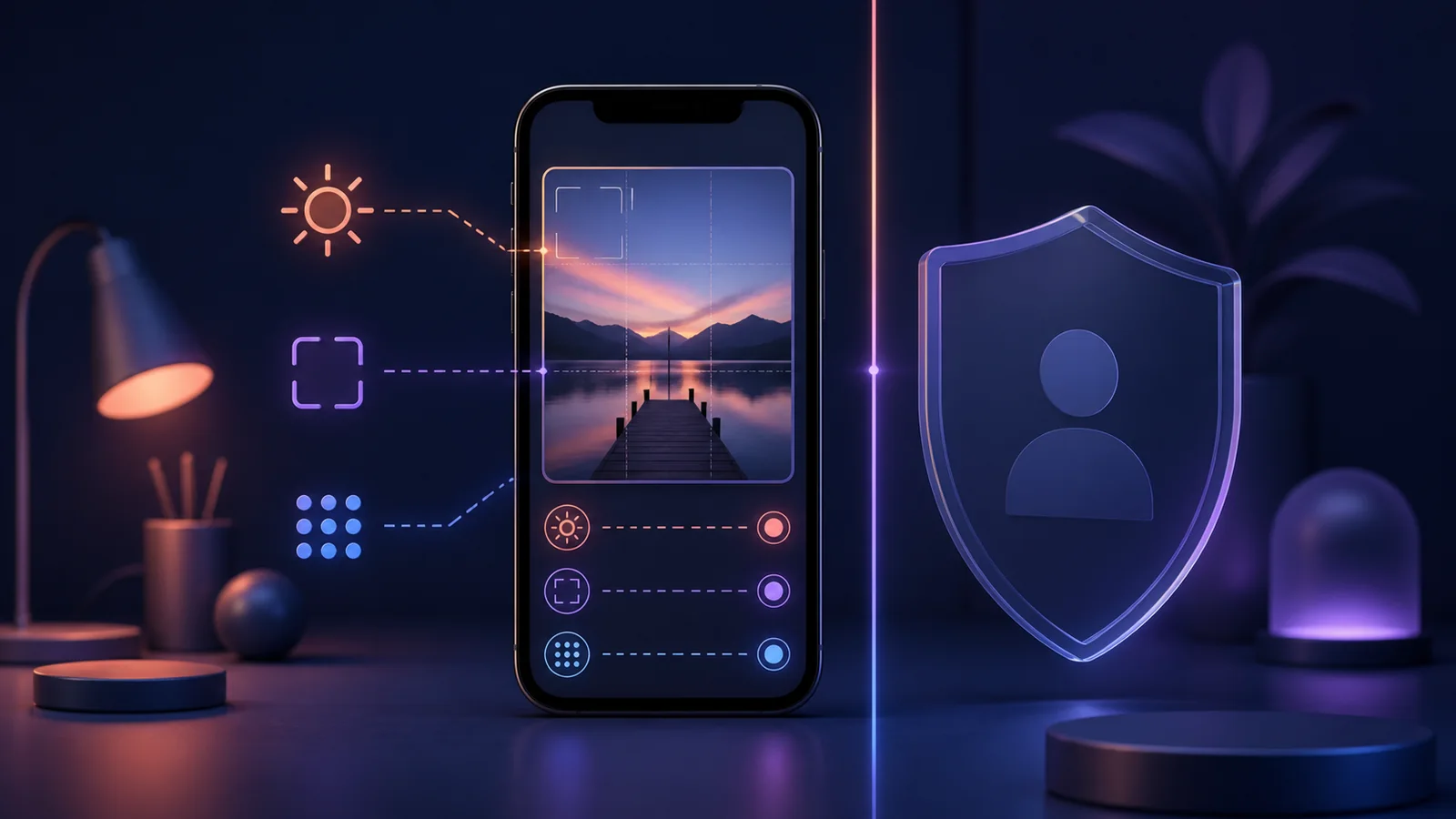
AI photo feedback is most useful when it behaves like a focused second pair of eyes: it can point out visible image conditions you may have missed, such as low light, blur, glare, a crop that cuts too close, or a distracting background. It is not a reliable judge of a person. It cannot measure attractiveness, character, mental health, identity, competence, or future outcomes from a photograph.
That distinction is not a minor disclaimer. It is the difference between using a tool for a practical editing task and asking it to make a claim it cannot support. This guide explains the boundary, how to interpret feedback, and what to do when the result feels wrong.
Amihotor’s [photo-presentation demo](/facial-attractiveness-demo) is designed around that narrower task. Before uploading anything, also read the site’s [privacy policy](/privacy-policy) and [terms of service](/terms-of-service) so you can decide whether the workflow fits your needs.
## The useful job: noticing visible, adjustable conditions
Photos have properties that are reasonably concrete. Is the subject underexposed? Is the image visibly blurred? Is a bright window pulling attention away from the subject? Is the portrait too tightly cropped to work in a circular avatar? These are questions a person can also inspect, and they can often be fixed by changing light, distance, angle, crop, or background.
An AI system can help describe those patterns consistently across a batch of images. That can be convenient when you are selecting a profile photo, preparing creator headshots, or checking whether an uploaded image is technically usable. Good feedback should be phrased as an observation plus an option: “The subject is backlit; try facing the window,” rather than “This photo is bad.”
The final decision remains human because context matters. A dim concert photo may be the right image for a music community. A slightly wider crop may fit a social profile but not a company directory. A system cannot know the audience, the story behind the photo, or how you want to be seen.
## The boundary: outputs are not personal truths
Avoid tools or prompts that promise to infer personal traits from a face or appearance. A photograph is an incomplete, staged record: the lens, lighting, pose, background, camera processing, and editing all shape it. An output that sounds confident can still be wrong, overly broad, or based on patterns that do not apply to a particular person.
In particular, do not treat photo feedback as a source for claims about:
- attractiveness or social value;
- ethnicity, religion, sexuality, gender identity, disability, age, or other sensitive characteristics;
- health, mental state, personality, intelligence, trustworthiness, or employability;
- whether someone is “real,” safe, honest, or compatible;
- predictions about dating, hiring, or social outcomes.
Those claims go beyond visible photo presentation. They can be inaccurate and harmful, especially when used to make choices about other people. A responsible photo-feedback product should decline them rather than wrapping them in a numerical score.
## A sensible interpretation workflow
When you receive automated feedback, separate observations from recommendations. An observation might be “the face is small relative to the frame.” A recommendation might be “crop to head-and-shoulders for this avatar.” The observation may be useful. The recommendation may or may not fit your goal. Ask yourself four questions:
1. Can I see the issue myself? Zoom in and check it.
2. Is it relevant to my destination? A banner image and an avatar have different needs.
3. Is the suggested change reversible? Prefer edits you can compare and undo.
4. Does the result still represent me? If it does not, stop.
This approach keeps the tool in a supporting role. You do not need to obey every recommendation. You can accept one technical improvement and ignore the rest.
## Why disagreement is normal
Different tools can give different feedback because they may use different image-processing methods, thresholds, prompts, or models. Even the same tool can respond differently after a small crop or compression change. That is a reason to be cautious with precise-looking scores: a number can make an uncertain judgment feel more certain than it is.
Use a small comparison set instead. If two versions differ only in lighting, compare them at the final display size. If one is sharper and easier to recognize, that is an actionable conclusion. If both are clear and you prefer one, your preference is enough.
For more technical reading, NIST’s face-recognition evaluation work discusses image quality as a factor in automated processing. That does not turn a quality signal into a statement about a person; it is a reminder that the input itself affects system behavior. See [NIST FRVT quality resources](https://pages.nist.gov/frvt/html/frvt_quality.html).
## Privacy is part of product quality
Before uploading a photo to any AI service, read what happens to the image. The service should explain whether it stores the original, how long it keeps results, who can access data, whether it uses uploads for model training, and how deletion works. It should also make clear that you may upload only images you are entitled to share.
The [FTC’s consumer privacy guidance](https://www.ftc.gov/business-guidance/privacy-security/consumer-privacy) emphasizes clear statements and honoring privacy promises. In the UK, the [ICO’s data-sharing code](https://ico.org.uk/for-organisations/uk-gdpr-guidance-and-resources/data-sharing/data-sharing-a-code-of-practice/) explains the importance of accountability when personal data is shared. Laws vary by location and use case, so this is not legal advice; it is a practical reason to choose services that state their practices plainly.
For your own use, remove unnecessary location details from a photo when possible, avoid uploading another person’s image without permission, and choose a tool that lets you delete or expire the result. A photo that seems ordinary can still contain personal information through its context.
## What responsible feedback sounds like
Responsible feedback is specific, limited, and actionable:
- “The face is in shadow; move toward softer front light.”
- “The background has several bright objects; try a simpler crop.”
- “This may be hard to recognize at avatar size; preview a closer crop.”
Irresponsible feedback makes broad personal judgments:
- “You look untrustworthy.”
- “This predicts dating success.”
- “You should change your features.”
The first group points to controllable photo choices. The second group overreaches. If a tool crosses that line, close it and use a simpler checklist or a trusted human reviewer instead.
## FAQ
### Can AI choose my best profile photo?
It can help compare visible technical factors. It cannot know your audience, meaning, or preferences. Use it to narrow options, then choose yourself.
### Are scores objective?
Not necessarily. A score depends on the system’s design and inputs. Prefer clear observations over a single opaque ranking.
### Should I upload photos of friends or clients for feedback?
Only with their informed permission and only when the service’s policy allows it. Do not use photo feedback to evaluate another person.
## Editorial disclosure and sources
Written by the Amihotor Editorial Team. Amihotor’s photo-feedback direction is intentionally limited to voluntary, adult, self-uploaded images and visible presentation guidance. It does not provide biometric identification, attractiveness scoring, health inference, or personality assessment. This article is educational and is not legal, medical, or psychological advice.